

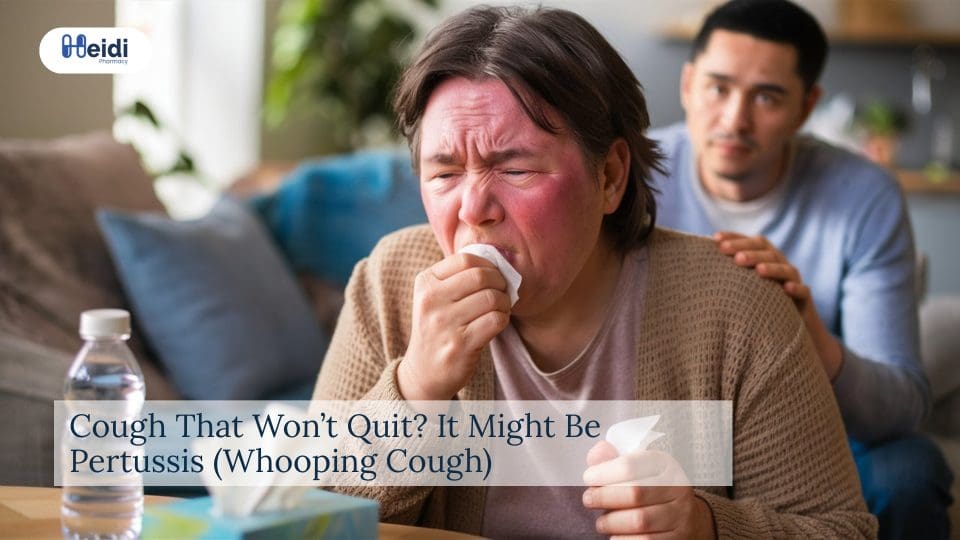
Almost everyone experiences a stubborn cough now and then—often after a cold, allergies, or seasonal flu. But what if your cough sticks around, getting worse instead of better? If it becomes forceful, keeps you up at night, or is paired with a unique whooping cough sound, it could be something more serious: whooping cough, medically known as pertussis.
At Heidi Pharmacy, we care deeply about your respiratory health. That includes raising awareness about whooping cough, its symptoms, the importance of the whooping cough vaccine, and practical steps you can take to protect yourself and loved ones.
What Exactly Is Whooping Cough?
Whooping cough is a highly contagious bacterial infection caused by Bordetella pertussis. It targets the respiratory tract, leading to severe, repeated coughing fits. After these fits, people often make a loud, gasping “whoop” sound when trying to catch their breath — giving the disease its memorable name.
While many think of whooping cough as a childhood illness, the truth is anyone can get it—even vaccinated adults, especially if immunity has faded over time. Understanding this illness matters because it’s not only uncomfortable but can also be life-threatening, particularly for babies and those with weakened immune systems.
Pertussis Symptoms: How It Progresses
The journey of pertussis isn’t like a standard cold. It unfolds in distinct stages over several weeks or even months:
1. Catarrhal Stage (Lasts 1–2 weeks)
- Mild fever
- Runny nose
- Scratchy throat and cough
- Mild, dry cough that feels harmless
At this point, most people mistake whooping cough symptoms for an ordinary cold.
2. Paroxysmal Stage (Can last 2–6 weeks or more)
- Severe, rapid, and repeated coughing fits (paroxysms)
- The telltale whooping cough sound when inhaling afterward
- Vomiting after coughing
- Extreme tiredness
Coughing fits can be so intense that they interfere with eating, drinking, and sleeping.
3. Convalescent Stage (Recovery, weeks to months)
- Gradual easing of cough frequency and intensity
- Cough may still return if you get another respiratory infection
Understanding these stages can help you spot pertussis symptoms early—before they become severe.

Who’s Most at Risk?
While anyone can catch whooping cough, it’s especially risky for:
- Infants under 1 year old (too young for full vaccination)
- Pregnant women
- Older adults and people with chronic illnesses
- People who haven’t had a booster in many years
For these groups, complications like pneumonia, seizures, dehydration, or even death are possible. That’s why early diagnosis and prevention are crucial.
The Critical Role of the Whooping Cough Vaccine
The most effective protection against whooping cough is the whooping cough vaccine. There are two main types:
- DTaP: Given to children under 7
- Tdap: A booster for adolescents and adults
- How long does whooping cough vaccine last?
Typically, immunity lasts about 5–10 years, which means adults and teens should get a Tdap booster every decade. Pregnant women are advised to get a booster during each pregnancy to protect newborns.
Even if you catch pertussis after vaccination, it’s usually much milder and shorter in duration.
How Is Whooping Cough Diagnosed?
Doctors often suspect whooping cough based on:
- Listening to the whooping cough sound
- Asking about your medical history and exposure risks
- Confirmatory tests like a throat or nasal swab (PCR) or blood test
Early diagnosis makes treatment more effective and helps stop the spread.
- Treatment: Whooping Cough Medication and Care Tips
Once diagnosed, doctors typically prescribe antibiotics, which:
- Shorten the period you’re contagious
- Help prevent spreading whooping cough to others
- Are most effective when started early
For people already deep into coughing fits, antibiotics might not fully stop the cough but are still critical for public health.
Other whooping cough medication and care tips include:
- Resting and staying hydrated
- Eating smaller, frequent meals to reduce vomiting
- Using a cool-mist humidifier to soothe the airways
- Avoiding smoke, perfumes, or dust that can trigger coughing
Over-the-counter cough suppressants often don’t help and may even be unsafe, especially for children.

What Does the Whooping Cough Sound Like?
The classic whooping cough sound isn’t subtle. After a long bout of coughing, people make a loud, high-pitched “whoop” as they desperately draw in air. However, not everyone—especially infants and adults—produces the “whoop,” which can sometimes make pertussis symptoms harder to spot.
If you or your child has a cough that leads to gasping, vomiting, or turns your face red or purple, see a doctor immediately.
Why Does Whooping Cough Keep Coming Back?
Many people wonder why whooping cough still exists despite vaccines. The reasons include:
- Waning immunity over time
- Reduced vaccination rates in some communities
- Silent carriers: vaccinated people may get mild pertussis symptoms and unknowingly spread it
These realities make boosters and awareness more important than ever.
- Whooping Cough in Adults: Often Overlooked
Adults often experience milder, lingering cough without the classic “whoop.” But they can still spread the disease, especially to vulnerable infants. If you’re an adult with a cough lasting more than three weeks, especially if it worsens at night, talk to your healthcare provider about pertussis.
- Practical Tips to Protect Yourself and Your Family
- Stay current on vaccines: Keep your own Tdap boosters up to date and check your children’s DTaP schedule.
- Practice good hygiene: Wash hands often and cover your mouth when coughing.
- Limit exposure: Keep babies away from people who have a persistent cough or cold-like symptoms.
- Seek medical care promptly: Don’t ignore a scratchy throat and cough that turns into severe coughing fits.
- Educate family and caregivers: Especially anyone in close contact with infants or pregnant women.
Myths vs. Facts About Whooping Cough
Myth: Only children get whooping cough.
Fact: Anyone can get it—adults are often the source of infection for babies.
Myth: Once you’re vaccinated, you’re protected for life.
Fact: Protection fades over 5–10 years, so boosters are necessary.
Myth: If you don’t hear a “whoop,” it isn’t whooping cough.
Fact: Not everyone makes the classic sound, especially adults.
Final Thoughts: Don’t Ignore a Cough That Won’t Quit
A persistent cough can feel harmless—but if it lasts weeks and especially if it comes with intense fits, vomiting, or the whooping cough sound, it’s worth checking out.
At Heidi Pharmacy, we’re here to help:
- We provide information on the whooping cough vaccine
- We help you stay up to date with boosters
- We can guide you on whooping cough medication and prevention tips
By understanding pertussis symptoms, staying vaccinated, and acting early, you help protect not just yourself—but everyone around you.
Need More Information? Visit Heidi Pharmacy Today!
Whether it’s questions about the whooping cough vaccine, booster schedules, or advice for managing a lingering cough, our team is ready to help.
Stay healthy, stay protected—and don’t let whooping cough catch you by surprise.